
How to prepare your jet ski for winter
The season is over and your jet ski will sit unused for several months. That's exactly when it's most likely to deteriorate: salt, damp and old fuel work away silently all winter. A good winterisation prevents expensive breakdowns and means you'll be back on the water in spring with no surprises.
Why does a jet ski need winterising?
A jet ski works in a very harsh environment: salt water, sand, sun and vibration. While you're riding, everything keeps moving. When it sits for months, the typical problems appear:
- Internal corrosion from salt residue in the cooling system and exhaust.
- Degraded fuel that clogs the injectors and fuel pump.
- A flat battery, or one damaged beyond repair.
- Dried-out gaskets and seals that end up causing leaks.
Most of the breakdowns we see in the workshop in April and May come from a poorly prepared winter.
The steps of a proper winterisation
1. Thorough cleaning, inside and out
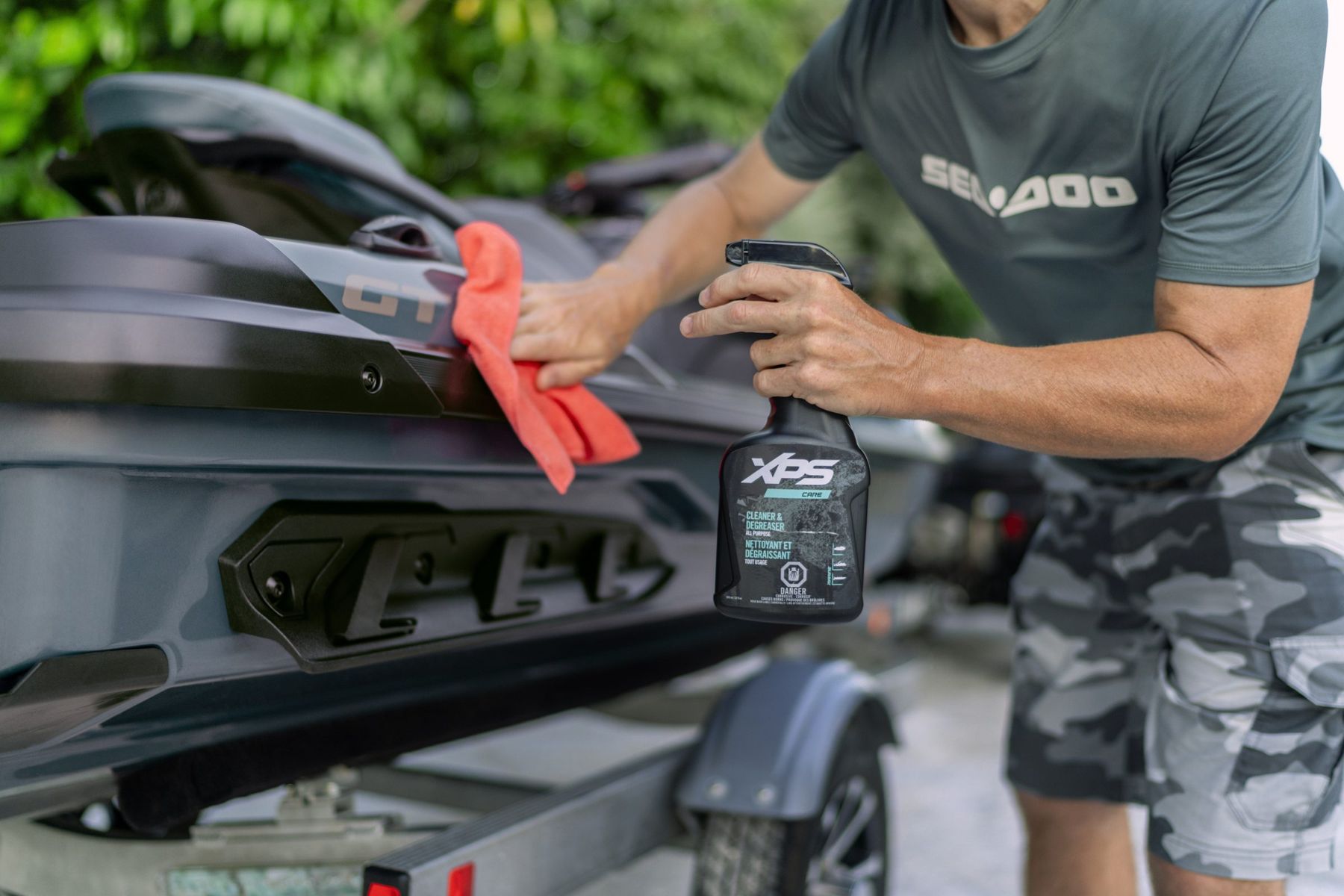
First, the hull and deck are washed with fresh water and a salt-neutralising product. Then comes the most important part: flushing the cooling system with the flush adapter and the engine running for the time specified by the manufacturer. This removes the salt and sand left inside.
2. Fuel: full tank and stabiliser
A half-empty tank builds up moisture through condensation. The best thing is to fill it up and add fuel stabiliser, then run the engine for a few minutes so the stabiliser reaches the whole injection system.
3. Oil and filter change
Used oil contains acids and combustion residue that attack the engine while it sits idle. That's why the oil and filter change is done before putting the jet ski away, not in spring. On Sea-Doo we use XPS oil and genuine filters.
4. Protecting the engine against corrosion
Anti-corrosion lubricant is applied to the areas that need it according to each model's manual, and the jet pump's grease points are lubricated. In the workshop we call this «fogging and greasing».
5. Checking key points
We take advantage of the jet ski being in the workshop to check the parts that suffer most during the season:
- Jet pump, impeller and wear ring (if your jet ski has lost power or vibrates, the cause is almost always here).
- Sacrificial anodes.
- Spark plugs and coolant condition.
- A scan with the official diagnostic tool (BUDS on Sea-Doo) to check warnings, usage hours and any pending campaigns or updates.
6. Battery
The battery is disconnected and left on a maintenance charger, or stored charged in a dry place. A battery that spends the winter flat usually ends up in the bin.
7. Storage
Ideally, store it in a dry, ventilated place, on its trailer or trolley, with a breathable cover and the seat slightly open so damp and mould don't form.
Should I do it myself or leave it to the workshop?
Some steps, like cleaning the outside, you can do yourself. But flushing the cooling system, protecting the engine and running diagnostics require specific tools and products. At an official service centre, we also:
- Follow the manufacturer's procedure for your specific model.
- Use genuine parts and products, which keep your warranty valid.
- Record it in your jet ski's service history: more value on the day you sell it.
- If we find anything, send you a quote before touching a thing.
And in spring?
When the good weather arrives, it's time for de-winterisation: connecting and checking the battery, checking for leaks, starting the engine and testing the jet ski on the water. If you like, we can also keep it for you over the winter with our jet ski storage service and have it waiting in the water on the first sunny day.